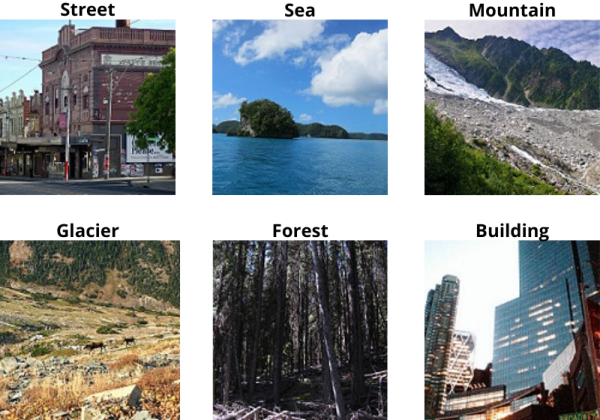
This project compares MXNet (Gluon API) and TensorFlow for image classification using models like AlexNet, LeNet, SimpleCNN, Logistic Regression, and VGG-16. Results show MXNet excels with LeNet, while TensorFlow outperforms in AlexNet and VGG-16, with fine-tuning boosting VGG-16 accuracy and showcasing transfer learning's effectiveness.

This project applies unsupervised learning to analyze Chicago crime data, identifying clusters and key features. It involves Exploratory Data Analysis (EDA), feature selection, and feature engineering to preprocess and prepare the data. Spectral Clustering outperforms K-Modes in clustering quality, as measured by higher Normalized Mutual Information (NMI) scores.

This project uses machine learning and deep learning models for sign language recognition, implemented in PyTorch. It includes logistic regression, ANN, and multiple CNN architectures optimized with SGD, Adam, and RMSprop. The best model achieved 97.8% test accuracy.
December 2021-January 2022

This project implements a meme classification system for SemEval 2022: Task 5 using BERT and Vision Transformer (ViT) models with ResNet-101 to classify memes as misogynous or non-misogynous. The ViT-BERT model improves performance by combining both textual and visual features.